Suggested Reading
Great books to improve your coaching. A curated guide to what to read first and what is secondary, focused on helping you think out of the box and evolve your coaching approach.
Our Reading Philosophy
We could just provide a synopsis of the books we like but that wouldn't be efficient. Instead we'll provide a guide to what to read first and what is secondary. One core theme of all these books is to help you think OUT OF THE BOX.
Because let's face it, doing the same thing over and over each year as the game and the players change is just dumb. We need to evolve before we can help our players do better. By being more and more efficient with our time, we can improve our team's performance faster than our competition. I always enjoy better and faster ways to teach a given skill.
Must Read - Start Here
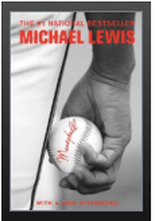
Moneyball: The Art of Winning an Unfair Game
by Michael Lewis
Lewis describes how the Oakland As won games with one of the smallest budgets in Major League Baseball. They used statistics not used by the rest of MLB to acquire players at very low prices. The key message for you is that you can make better decisions in volleyball by using stats. Don't trust your eyes as they can fool you. It's a great read and I'm a strong believer in the lessons from this book.
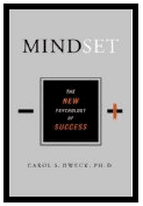
Mindset: The New Psychology of Success
by Carol Dweck
Dweck's research has led to fascinating findings about how our mindset determines our success. While we all have pre-dispositions, much of how we approach life can be changed by understanding some key factors.
Stats-Driven Coaching
Since we are a stats driven company and coaching method, Moneyball is a must read. It's recommended by USAV, GMS and just about any serious coaching clinic group. The reason is that you really need to internalize how significantly stats can clear up any decision make issues.
Here's the most critical statement by the author: "... Some coaches believed they could judge a player's performance simply by watching it. In this they were deeply mistaken..."
We all have "gut instincts" but it's important to validate what you think you see with stats. It's really easy to be fooled by athleticism. Stats don't look at style, they look at results. Where does the ball go vs. how good does the athlete look. Don't be fooled like I've been. It can cost you your season. If you like stats, you can dig deeper by reading "Scorecasting".
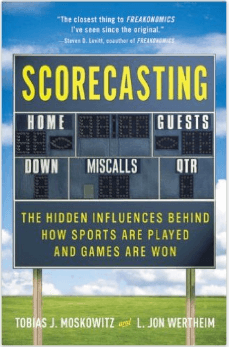
Scorecasting: The Hidden Influences Behind How Sports Are Played and Games Are Won
by Jon Wertheim
In Scorecasting, University of Chicago behavioral economist Tobias Moskowitz teams up with veteran Sports Illustrated writer L. Jon Wertheim to overturn some of the most cherished truisms of sports, and reveal the hidden forces that shape how basketball, baseball, football, and hockey games are played, won and lost.
Mindset & Mental Models
The second book is Mindset. This mental model is important for both us as coaches and for understanding our players. One of the biggest myths it busts is the notion of "building self esteem." Self esteem is not a goal but an outcome of hard work, failure and effort. You can have high self esteem and no skills.
Other books related to this are about being positive and happy. "Learned Optimism" is a great read, particularly for girls. "The Happiness Track" is a focused "how to" manual.
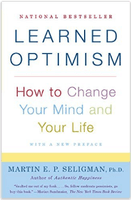
Learned Optimism: How to Change Your Mind and Your Life
by Martin E.P. Seligman
Seligman draws on more than twenty years of clinical research to demonstrate how optimism enchances the quality of life, and how anyone can learn to practice it.
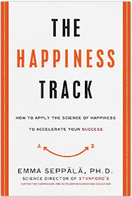
The Happiness Track: How to Apply the Science of Happiness to Accelerate Your Success
by Emma Seppälä
Seppälä demonstrates that being happy is the most productive thing we can do to thrive—whether at work or at home. She shares practical strategies for applying scientific findings to our daily lives.
Understanding Potential & Talent
Next is a series of books about what a person's potential might be. The most famous of which is Gladwell's "Outliers". One the most quoted concepts is the 10,000 hour rule. Put simply, it takes 10,000 hours of concentrated practice to become at expert at anything.
While this is quoted a lot today, it's actually an oversimplification of Erickson's work. The notion is that anyone can become an expert with hard work. It's only partly true. "Talent Code" and "Talent is Overrated" are both books that tend to reinforce the hard work over natural ability idea but it's disproven in the "Sports Gene".
I would still recommend reading any of these books in that it's thought provoking. Gladwell's is the easiest to read as he is the best writer of the group.
Outliers: The Story of Success
by Malcolm Gladwell
Closely related to "The Talent Code" and "Talent is Overrated", Gladwell adds the notion of time and place as factors to world-class success. If you haven't read his other books, "Blink" and "Tipping Point", consider this the beginning. You'll find his writing engaging and informative.
The Talent Code: Greatness Isn't Born. It's Grown. Here's How.
by Daniel Coyle
This book is a companion to "Talent is Overrated". Both books share the same premise that hard work is the key to success. Coyle delves into "hot beds" of talent and discovers how they work and the nueroscience of learning.
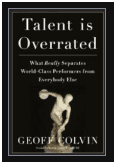
Talent is Overrated: What Really Separates World-Class Performers from Everybody Else
by Geoff Colvin
Colvin disproves traditional beliefs about "gifted" people and shows how motivation and hard work lead to success. It's an inspiring book and gives credit to coaches and players who dedicate themselves to excellence. You should read this along with "The Talent Code".
The Sports Gene: Inside the Science of Extraordinary Athletic Performance
by David Epstein
Epstein challenges the 10,000 hour rule that says that anyone can become an expert with practice. He shows where specific genetic traits can make a huge difference in our ability to perform at an elite level.
Volleyball Coaching
The final section is coaching oriented books. I only have a few volleyball recommendations because there are many resources and I also recommend going to a coaching clinic. USAV Coach Academy (formerly CAP) is a must. This is followed by Gold Medal Squared and the Art of Coaching Volleyball. All great resources.
From a reading standpoint, I think everyone knows about the Volleyball Coaching Bible. That's a must have reference. Along with that I would recommend Aggressive Volleyball. Waite's approach adds the "aggressive" piece which makes his content more interesting and consistent with the way I like to coach.
The Volleyball Coaching Bible, Volume II
by American Volleyball Coaches Association
Most of you have already heard of this book. It is the Volleyball "Bible" and a must read for any serious volleyball coach. It contains the recommendation of 20 successful volleyball coaches and is endorsed by the AVCA.
Aggressive Volleyball
by Pete Waite
While Waite covers many of the fundamentals described in other volleyball skill books, he takes the extra step of talking about how to build an "aggressive" team. His writing is clear and straightforward and can help you and your team move in the right direction.
Additional Coaching Resources
I have also included a number of other good books to read. They are mostly about mental attitude in times of stress. All great ways to gain some new perspective.
The Man Watching: Anson Dorrance and the University of North Carolina Women's Soccer Dynasty
by Tim Crothers
Anson Dorrance has over 20 NCAA soccer championship titles. He is the originator of the Competitive Cauldron and his coaching techniques are widely emulated. A highly recommended book at all major volleyball coaching clinics.
Eleven Rings: The Soul of Success
by Phil Jackson and Hugh Delehanty
Phil Jackson's success in the NBA are well know. So are high unusual "zen master" techniques. However, this books reveals how complex the process of winning is and dynasties are fragile entities.
The Coaching Habit: Say Less, Ask More & Change the Way You Lead Forever
by Michael Bungay Stanier
Stanier reveals how to unlock your peoples' potential. He unpacks seven essential coaching questions to demonstrate how--by saying less and asking more--you can develop coaching methods that produce great results.
Bringing Out the Best in People
by Aubrey Daniels
This book is for people managers but applies well to coaching. Using behavior mod techniques, Daniels outlines the keys required to successfully get your team to accomplish its goals.
Catch Them Being Good: Everything You Need to Know to Successfully Coach Girls
by Tony DiCicco, Charles Salzberg and Colleen Hacker
When your team has gained sufficient ball handling skills, it's time to train the mind. This book provides key steps that will enhance your team's mental game. It contains many team building exercises that are fun and productive.
Coaching Clinics & Programs
Beyond Books: Live Training
While books are valuable, hands-on training is essential for developing your coaching skills. We highly recommend: