Volleyball Coaching: How to Run Organized, Effective Practices
Volleyball coaching is the work of developing players through deliberate practice design: clear objectives each session, purposeful repetition on priority skills, and adjustments driven by match feedback. Strong coaches align drills with team systems, communicate expectations simply, and run weekly structures that make improvement visible on the court.
Strong coaching isn't only knowing drills — it's running practices that stay intentional, structured, and consistent week after week. When practice has clarity, players improve faster and coaching stays focused on what actually moves the needle.
Good Coaching Is More Than Good Drills
Many coaches spend time searching for new drills or creative ideas.
But improvement doesn't come from variety alone.
Players develop when:
- Skills are emphasized intentionally
- Practice themes build week to week
- Repetition is purposeful
- Adjustments follow match feedback
Drills matter.
Structure matters more.
If you need a starting set of activities, our guide to beginner volleyball drills covers reliable options you can plug into your plan.
The Core Responsibilities of a Volleyball Coach
Effective volleyball coaching comes down to three responsibilities.
1. Skill Development
Identify the skills that matter most for your level and reinforce them consistently. Improvement comes from focused repetition, not constant change.
2. Practice Structure
Organize sessions so each block has a clear objective. A repeatable structure allows players to know what to expect and keeps practice efficient.
3. Game Adjustment
Use match performance to inform your next practice. Strong coaching connects competition feedback to structured training.
When these three areas align, practice feels intentional instead of reactive. An organized volleyball practice plan template gives you that structure so each block has a clear role. For the coaching method behind it, see volleyball practice planning.
Why Organization Separates Average and Strong Coaches
You can know the right drills.
But without a system for planning and organizing, it becomes harder to:
- Track what you emphasized recently
- Balance skill development across the week
- Adjust after matches
- Plan efficiently under time pressure
Organization doesn't make you a better strategist.
It makes your strategy easier to execute.
Coaching Is Already Demanding
Most coaches are balancing:
- Work or teaching
- Match preparation
- Travel and logistics
- Communication with players and parents
Practice planning shouldn't be the part that consumes unnecessary time.
Having a clear, repeatable framework makes the weekly workload lighter and more consistent.
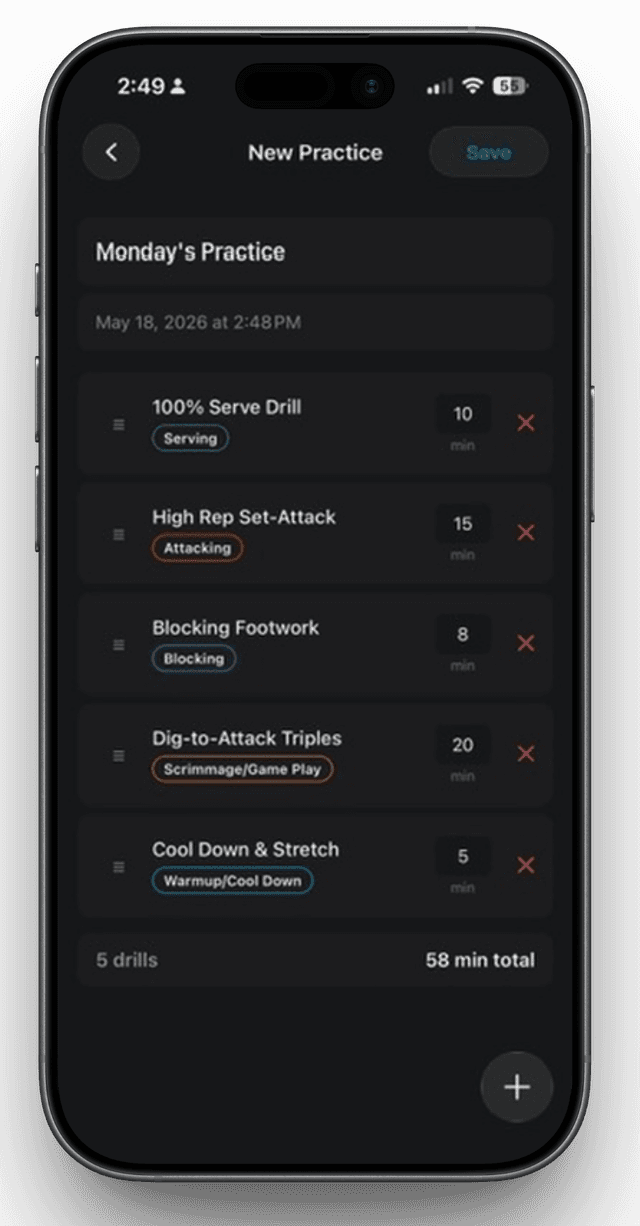
Build your practice plan with SoloCoach
Pull drills from a library, build a timed plan in minutes, and run it drill by drill with a countdown timer.
Build your first practice plan — freeDrill Libraries by Skill Area
Use these drill libraries to build focused blocks and connect them into a complete weekly plan.